

BE6.1_Let’s check the dictionary
1. What is customer service?
2. How do you know that the customer service is good?
3. What does good customer service mean to you?
4. Why is customer service important for the company?
BE6.2_Read the text. Why do you agree or disagree with it?
Customer service is very important for any business. Good customer service means helping customers in a friendly and polite way. When customers are happy, they will come back and buy more products. They will also tell their friends about the good service, which brings new customers to the business.
Happy customers help the business grow. If a customer has a problem, it is important to solve it quickly. This shows the customer that the business cares about them and makes them feel satisfied.
Good customer service also makes the employees feel good about their work. When employees are nice to customers, they create a positive environment. This makes the workplace happy and productive.
In conclusion, customer service is an important part of any successful business. It keeps customers happy, brings in new customers, and makes the workplace better. Always remember that good customer service leads to a successful business.
BE6.3_Read the text again, paying attention to the words in bold. Then, answer the questions below.
Which of the words in bold means…
- feeling happy because things are good?
- nice and kind to people?
- doing a lot of work and getting good results?
- doing well or getting what you want?
- that matters a lot and is needed?
- to find an answer or fix a problem?
- showing good manners and respect to others?
- to feel interested in someone or something?
BE6.4_Type the words from the list next to their opposites.
BE6.5_Complete the sentences with the correct options. Do you agree with these statements? Why?
BE6.6_Match the customer service tips with their names.
BE6.7_Read the text again and answer the questions below.
- Which of these tips are the most important ones? Why?
- What other tips would you like to add to the list?

BE6.8_Brainstorm five key qualities of good customer service for the businesses in the pictures.
Wordlist:
- important
- unimportant
- friendly
- unfriendly
- polite
- rude
- to solve
- to cause
- to care about
- to ignore
- satisfied
- dissatisfied
- productive
- unproductive
- successful
- unsuccessful
BE6.9_Answer the questions
1. Customer service is the most important part of any business. Do you agree?
2. Some people think that good customer service can make or break a company. What do you think?
3. Companies should always listen to their customers’ feedback. Is this a good idea?
4. Customer service should be friendly and helpful at all times. Is this realistic?
5. Some people say that great customer service can change a customer’s mind about a company. Do you think this is true?
BE6.10_Describe a time when you received really bad customer service. Use the same wordlist (6.8)
- What were you trying to buy or do?
- What exactly was wrong with the customer service?
- How did the staff behave?
- How did you feel at that moment?
- Did you speak to a manager about the problem?
BE6.11_Read the announcement and answer the questions.
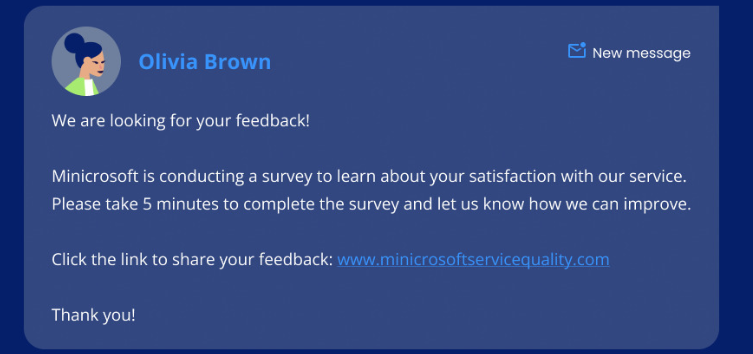
1. What is Minicrosoft doing?
2. Why do they need to ask people questions?
3. How helpful is it to get feedback on a service or product?
4. What questions would you ask in the survey?
BE6.12_Read the article and complete it with the headings.
BE6.13_Read the article again and choose if the statements are True or False.
BE6.14_Remember the last time when you received service at a restaurant, store, or any other place. Think about whether the service was good or bad and answer the CSAT questions.
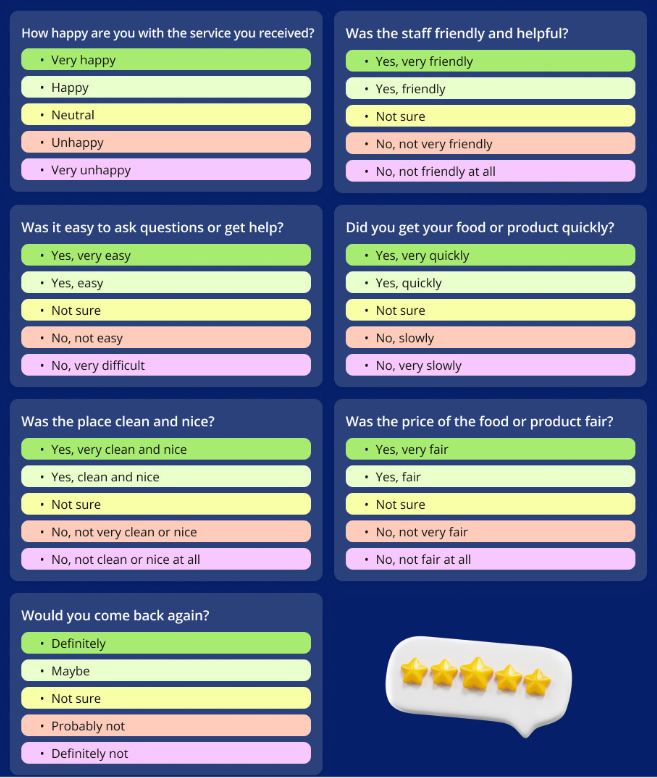
BE6.15_Read the customer feedback and answer the questions below.
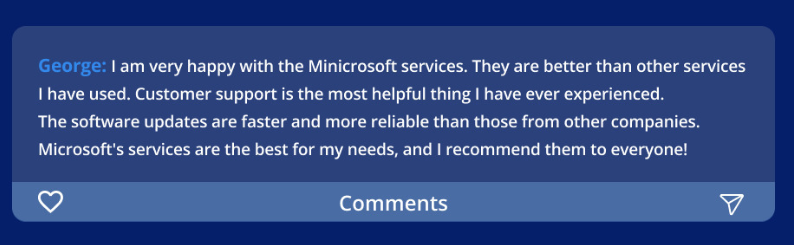
1. Is it a positive or negative feedback?
2. What does George like about Minicrosoft services?
3. What words does George use to compare Minicrosoft services with other services?
4. What words does George use to show that Minicrosoft services are the best?
Comparative and Superlative Adjectives
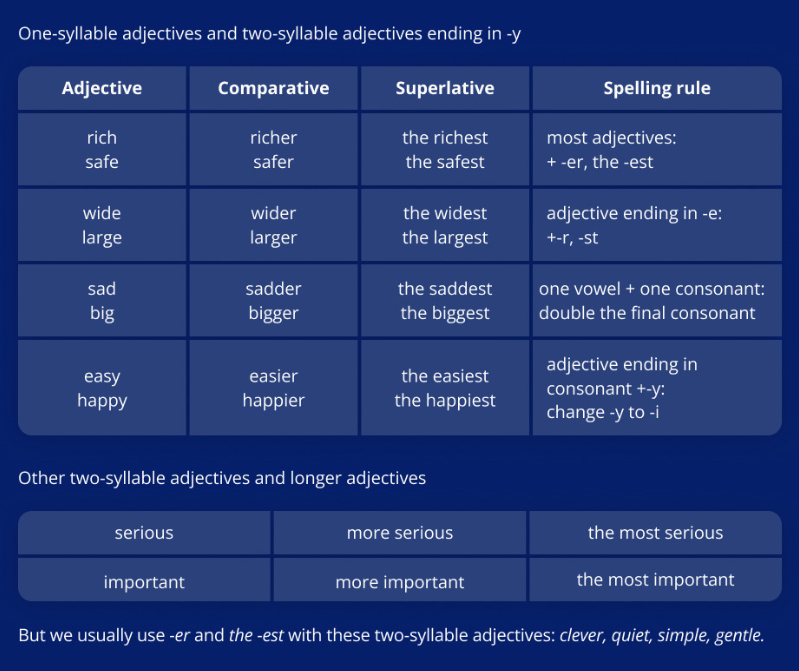
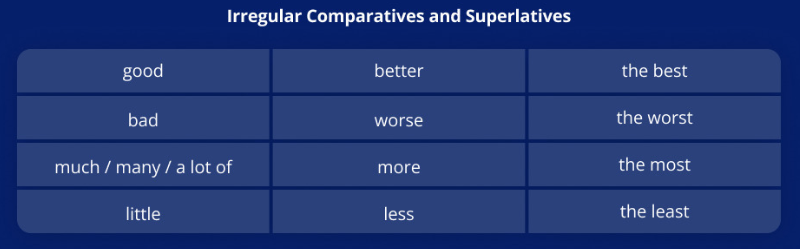
BE6.16_Read the sentences and answer the questions.
1. Our new software is faster than the previous version.
- Is the new software slower or faster than the old version?
- Is this sentence comparing two things or many things?
- Which word shows the comparison in this sentence?
2. Our company has the best customer service in the industry.
- Is our company’s customer service better than most companies or the best of all companies?
- Are we talking about one company or many companies in this sentence?
- What word is used to show that something is the highest or most excellent?
3. Our sales team is more effective than our marketing team.
- Is the sales team more or less effective than the marketing team?
- Are we comparing the sales team to one or many other teams?
- Which word shows the comparison in this sentence?
4. This is the longest report we have ever written.
- Is this report shorter or longer than any other report we have written?
- Are we comparing this report to one report or all reports we have written?
- Which word shows that this report is at the top in length?
BE6.17_Ready to practice? Complete the sentences with the correct alternative
BE6.18_Look at the picture and compare the smartwatches of different brands.
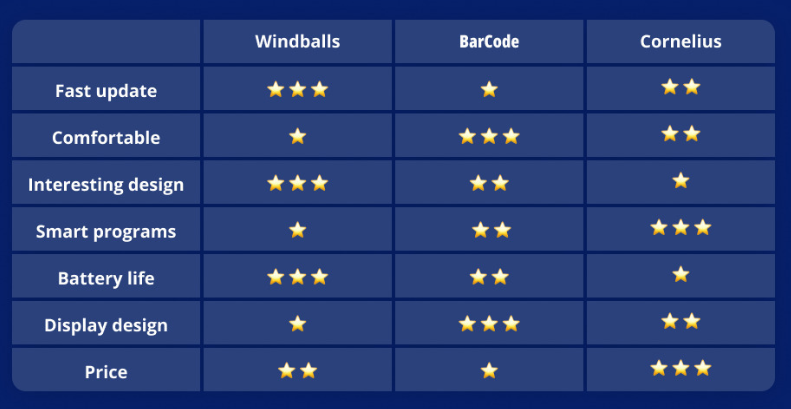
Example: The updates in Windballs and Cornelius smartwatches are faster than in Barcode one. The updates in Windballs are the fastest of all.
BE6.19_Remember a time when you received excellent service and very poor service. This could be at a restaurant, store, hotel, or any other place. Compare these experiences. Speak about:
- The staff’s behavior
- Speed of the service
- Quality of the service
BE6.20_Complete the sentences with the correct form of the adjective in brackets
BE6.21_Answer the questions.
1. Which type of business do you think has better customer service: a small company or a big company?
2. What is the best way for a company to make customers happy?
3. Do you prefer shopping in local businesses or big chain stores? Why?
4. Which is more important for a company: having good products or having good service?
5. What is the most important thing you look for when choosing a company to buy from?
6. Which do you think is better for customer support: email or phone calls?
7. What is the best way for a company to solve customer complaints?
8. Do you find it easier to get help from a store with many employees or one with few?
9. What makes a company’s customer service the most satisfying for you?
BE6.22_Complete sentence pairs with the correct comparative and superlative forms of the adjectives from the list.
BE6.23_Read the information about the company and complete the sentences below.
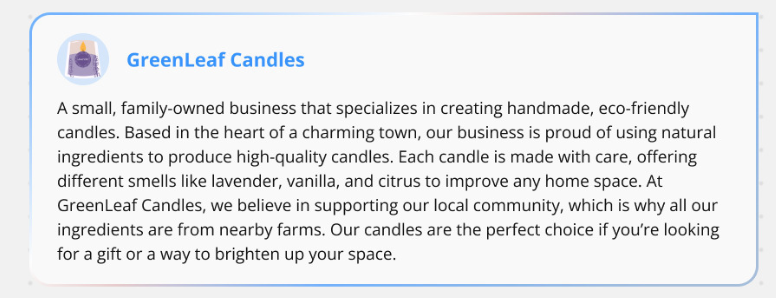
1. GreenLeaf Candles is a company that produces and sells …
2. The special feature of their product is …
3. The company supports …
4. The target customers of this business are people who …
5. Some potential problems customers might have with this product are …
BE6.24_Look at the picture. What problem does the customer have? What do you think some other common customer complaints are?

BE6.25_Listen to the dialogue and complete the summary below with the missing words. What other solutions can you share?
BE6.26_Read the sentences from the dialogue and complete the definitions with the words in bold.

BE6.27_Read and complete the article with the words from the list.
BE6.28_Read the article again and explain why the sentences below are false.
1. When a customer makes a complaint, you should ignore it and move on.
2. Apologizing for the mistake shows that you do not respect your customer.
3. Offering a solution means asking a customer to help with ideas to fix the problem.
4. It is not necessary to act quickly to fix a problem when you learn about it.
5. Collecting feedback after solving a problem helps only your customers, not your business.
BE6.29_Complete the dialogues with the words from the list.
BE6.30_Imagine you are the head of the customer service department. You are going to give a speech about handling complaints. Use the questions below as a plan.
1. What topic are you going to present? Why is it important?
2. What are the most important steps in working with a complaint from start to finish?
3. Why is each step (listening, apologizing, offering solutions, acting quickly, collecting feedback) important in the process?
4. What examples from your experience of good and bad complaint solving can you share?
5. What does everyone need to do to improve their skills of complaint solving?
BE6.31_Choose the correct options to complete the sentences below.
Example: I’m afraid I have a … [complaint / a solution]. Can you help me? → I’m afraid I have a complaint. Can you help me?
BE6.32_Read the article below and complete the headings with the missing words. Then, answer the questions below.
1. Which of the strategies do you find the most useful? Why?
2. What is one way to communicate regularly with customers?
3. What does active listening involve?
4. Why is it important to remember details about your customers?
5. How can you show you appreciate your customers?
6. What are some ways to build a community with your customers?
7. Why should businesses collect feedback from customers?
8. How does speeding up response times help customer relationships?
BE6.33_Listen to the recording and choose True or False.
BE6.34_Listen to the recording again and complete the phrases below. Then, answer the questions.
1. Which strategy from the article does the customer support agent use?
2. What are some good and bad points of it?
3. Which phrases help:
• to build a connection with a customer?
• to show appreciation?
• to build trust?
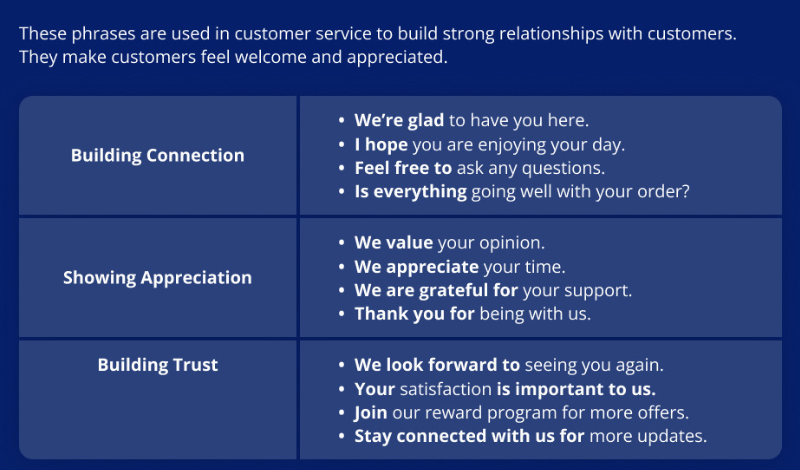
Phrases for Building Customer Relationships
BE6.35_Answer the questions
1. In the sentence ‘We value your opinion,’ is the speaker saying that the listener’s opinion is important?
2. Is the speaker thankful for the listener’s time in the sentence ‘We appreciate your time.’?
3. Is the speaker thankful for the listener’s help or support ‘We are grateful for your support.’?
4. Does the speaker hope the listener will come back in the sentence ‘We look forward to seeing you again.’?
5. Does the speaker care if the listener is happy in the sentence ‘Your satisfaction is important to us.’?
6. Does the speaker want the listener to keep in touch in the sentence ‘Stay connected with us for more updates.’?
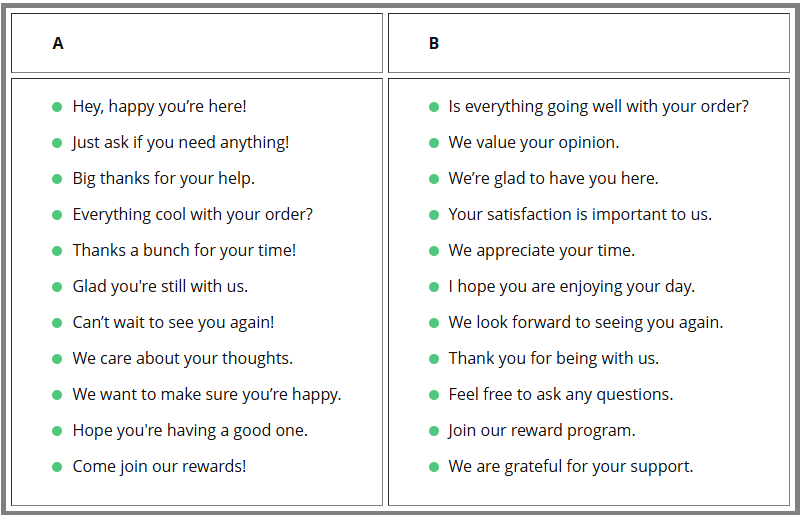
BE6.36_Read the list of phrases in column A and choose a more formal phrase from column B.
Example: Call us more to get updates! → Stay connected with us for more updates.
BE6.37_Imagine you are giving an interview about how to build good relationships with customers. Discuss the questions below.
1. What is the role of customer communication in building a business?
2. How do good customer relationships help a business? Think about how happy customers can help the business.
3. What are examples of bad customer communication? Give examples of what can go wrong, like not answering customer questions or not listening to their problems.
4. What would you do with a dissatisfied customer?
5. What would you do if a customer wanted the money back?
6. What would you say if a customer complained about a product?
7. How would you help a customer who feels ignored?
BE6.38_Complete the sentences with the correct alternative
BE6.39_Complete the comments with the missing phrases. Do you agree or disagree with the following ideas? Why?
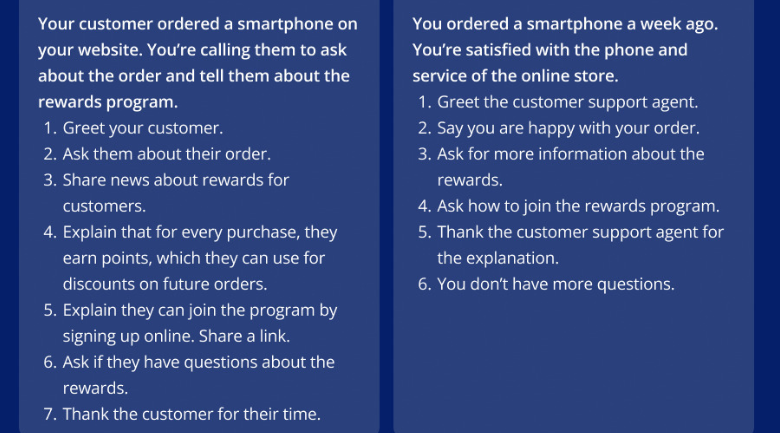
BE6.40_Practice building strong relationships with your customers. Role-play a dialogue by following the prompts on your card.
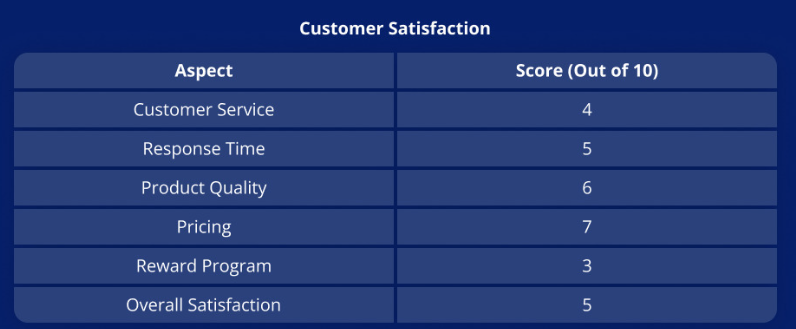
BE6.41_Look at the chart and recommend what the company needs to do to improve customer relationships.
BE6.42_Match the sentence halves.
BE6.43_Read the post and answer the questions below.
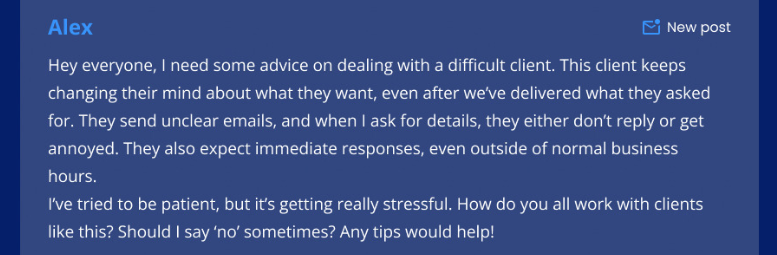
1. What problem is Alex describing?
2. How can you give the definition of a ‘difficult client’?
3. What would you recommend to do to successfully work with a difficult client?
BE6.44_Read the comments and choose the correct options. Which comments do you agree with and why?
BE6.45_Listen to the podcast and complete the titles of the difficult clients the speaker discusses. What are their descriptions?
BE6.46_Listen to the podcast again. Which of the tips below are wrong and why?
1. You can’t set clear limits with the ‘Never-Satisfied’ clients.
2. To work with the ‘Unfriendly’ customers, offer clear choices, and guide them in making decisions.
3. Stay polite and friendly even with unfriendly customers.
4. Let your customers contact you at any time they need it.
5. It is important to find solutions to the customer’s problems.
6. Asking for feedback shows that you care about the client’s opinion.
BE6.47_Adjective revision – Choose the correct form
BE6.48_Complete the sentences with the words from the list. Which of these phrases can you use with a difficult customer?
BE6.49_Read the sentences below. Do you agree or disagree with them? Why?
1. A polite response is more effective than an angry response when talking with difficult customers.
2. The ‘Never-Satisfied’ Client is easier to work with than the ‘Unsure’ Client.
3. Being calm is the most important skill when dealing with a rude customer.
4. Offering fewer choices is better for the customer who can’t decide.
5. The ‘Unfriendly’ Client is the hardest type of customer to work with.
6. Setting limits is less important than being polite when working with difficult clients.
7. It’s better to listen more than to speak when a customer is dissatisfied.
8. A quick solution is more satisfying to a customer than a slow, detailed explanation.
9. A positive mood is as important as offering solutions when dealing with difficult customers.
10. The least successful thing when dealing with a difficult customer is following up later.

BE6.50_Listen to the conversations and answer the questions below.
BE6.51_Give a speech on how to work with difficult customers. Follow the prompts below.
1. Start with “Working with difficult customers can be hard.”
2. Describe the types of difficult customers.
3. Give advice on how to work with difficult customers.
4. End your speech with “These tips will help you work with difficult clients.”