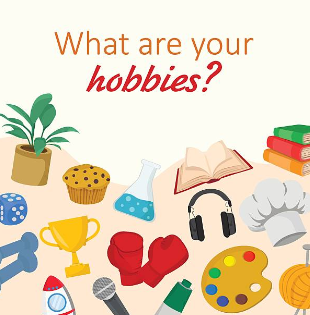
Quiz time! Name 3 hobbies that:
- you need to do outside;
- are very creative;
- are connected with sport;
- can make you relaxed;
- you can do at home.
Listen to the audio and write numbers 1 – 12 in gaps next to them
Choose a hobby and explain what it is. Let your teacher guess.
Example:
You: This hobby is about making something that you can use when there’s no electricity in your house.
Teacher: Is it candle making?
You: Right.
Expressing likes, dislikes and preferences.
Which of the phrases below are positive, negative, or neutral?
- I prefer
- I’m keen on
- I don’t like
- I’m crazy about
- I love
- I hate
- I like
- I don’t mind
- I can’t stand
- I am not keen on
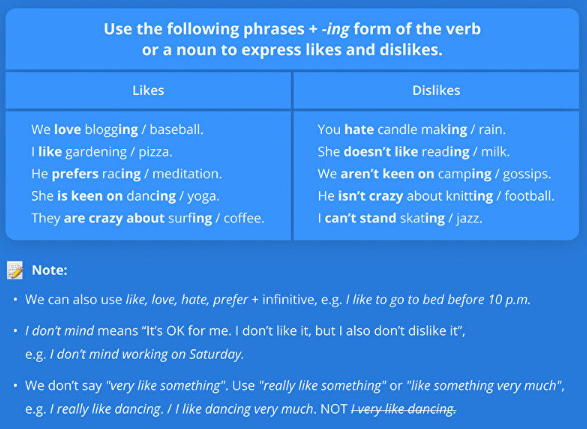
Complete the sentences with the missing words
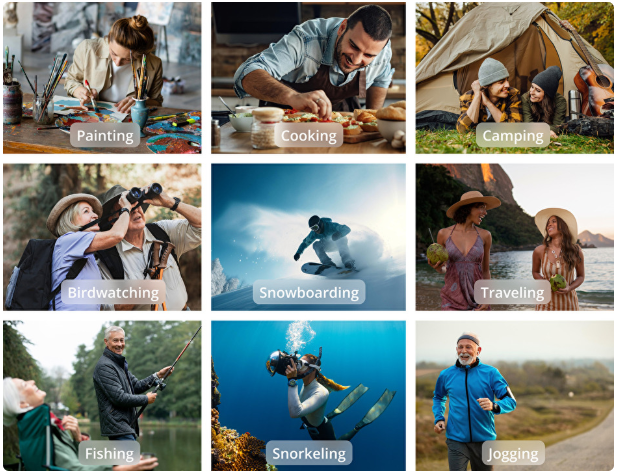
Look at the picture and make sentences about people’s hobbies. Use the words/phrases suggested
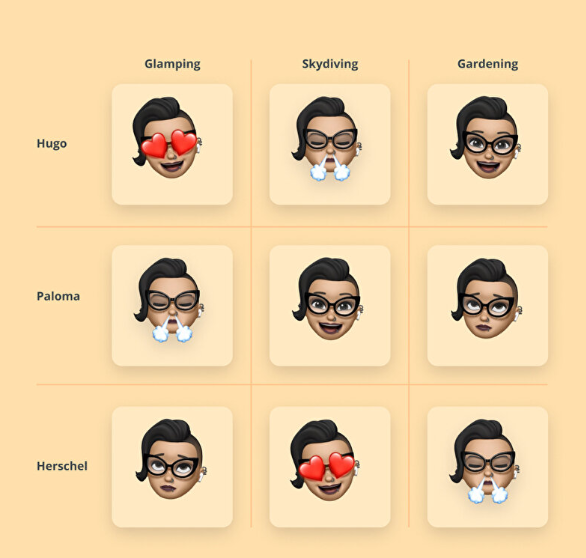
- love
- like
- prefer
- be keen on
- be crazy about
- don’t like
- hate
- not to be keen on
- not to be crazy about
- can’t stand
- don’t mind
Talk about your most favourite and least favourite hobbies.
Put the words in brackets in the correct place in the sentence. Which of these sentences are about you?
1. I take the time to relax and do nothing. (rarely)
2. I just scroll through my social media, but it hardly ever works. (usually)
3. I close my eyes for a few minutes and try to forget about the world. (sometimes).
4. I turn on some music when I need to relax and let it take me away. (often)
5. I feel stressed or tired, so I don’t need to relax. (seldom)
6. I take a day to relax and do nothing. (once a month)
Read the article
New ways to relax
Sometimes, we feel stressed and need to relax. There are many ways to do this, but some people like to try unusual relaxation techniques. Here are some examples:
Laughter yoga is a fun way to stay healthy and happy. During laughter yoga, you start by doing some warm-up exercises to get your body ready. Then, you do breathing exercises to help you relax and focus. Next, you start laughing! It can be a fake or real laugh, it’s not important. The idea is to start moving and relax your body.
Floatation therapy is a relaxing experience. You lie in a pool filled with salt water that makes you float. The water has the same temperature as your body, and there’s no light, so it feels like you are in space. During floatation therapy, you can choose to listen to music or complete silence. Some people prefer to meditate or imagine unreal worlds.
Forest bathing is a way to relax and connect with nature. It’s also called shinrin-yoku in Japanese. You can do it by walking slowly in a forest, breathing, and enjoying nature. When you do this, you can take off your shoes and feel the ground under your feet. You can also touch the leaves, listen to the sounds of birds, and look at the colors of the plants.
ASMR: this stands for Autonomous Sensory Meridian Response. It’s a pleasant feeling that some people get from special sounds, like soft speaking or scratching. If you’re interested in trying ASMR, you can search for videos online or try listening to calming sounds like rain or waves. Just remember to listen in a quiet place and give yourself time to relax and enjoy it.
These are just a few examples of unusual relaxation techniques. If you’re feeling stressed — try something new to see what works for you.
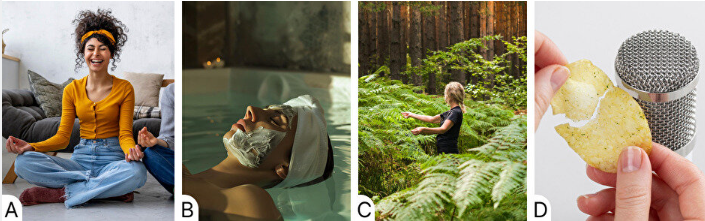
Match the names of relaxation technique and pictures.
Read the article again and do the exercise:
Complete the comments with the missing prepositions
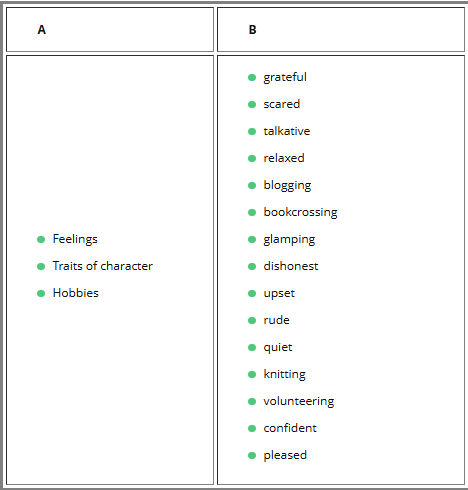
Read the topics in column A and find all words from column B that belong to these topics.
Make 8 sentences. Each sentence must have both words/phrases given below
1. Relax / not mind
2. Talkative / prefer
3. Dishonest / rarely
4. Funny / at present
5. Gardening / twice a day
6. Hard-working / these days
7. Rude / can’t stand
8. Surfing / right now
Ask your teacher
1. Ask questions to find out what kind of personality your teacher has and how stressed he/she is. Give your teacher recommendations on how he/she should relax. Explain your choice.
2. Tell your teacher what kinds of relaxation techniques you use and which ones you would like to try in the future. Say why.