Let’s revise
Complete the questions with the missing words and answer them

Choose the statements that best describe you and explain why
- I often cannot understand how I feel.
- I feel more positive emotions than negative ones.
- It is difficult for me to express my emotions in words.
- I prefer to hide my emotions from other people.
- It is easy for me to understand what other people feel.
- I am open to new feelings and experiences.
- It is always easy for me to control my emotions.
Answer the questions using the words from the Wordlist
What do you feel when…
1. you find $20 in your winter jacket?
2. you start a new big project?
3. you see your favorite celebrity?
4. you lose your keys?
5. you accidentally drop your phone in the toilet?
6. you eat a whole cake by yourself?
7. you step on a Lego?
8. you watch “American Horror Story” alone?
9. you go out for a run?
10. you get a present from your colleague?
WORDLIST
- excited
- grateful
- motivated
- pleased
- relaxed
- surprised
- scared
- stressed
- unhappy
- upset
Read the article and complete the statements
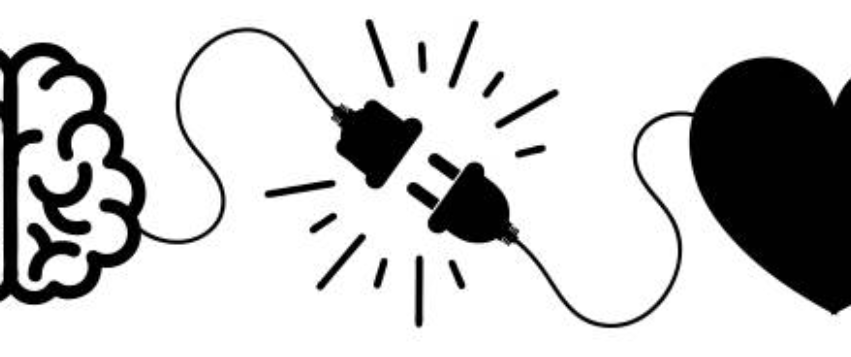
Emotional intelligence
Emotional intelligence (EI) is a skill that helps you understand and control emotions. You may be surprised, but there are many people who can’t do it. Many of us hardly ever understand if they or people around them are excited or scared, relaxed or upset, motivated or stressed, and so on. For these people, EI is a great tool that has lots of positive results:
– Strong EI helps people to create better relationships with the people around them because they understand the feelings and needs of others.
– People with strong EI are better at speaking. They usually pay more attention to the emotions of other people, so they can easily break the ice and make sure everyone understands what they are saying.
– Good EI helps people understand their feelings and needs and make smart decisions in their life because they always think about the results of what they do.
– People who have high EI often can control their emotions and live through hard times. They become OK again quickly after bad situations in their lives.
– People with higher EI are usually successful and do better in their jobs. This is because they know how to read the emotions of their colleagues and handle difficult situations at work.
If you want to develop your emotional intelligence you can analyze your and other people’s reactions, learn to understand the feelings of others, practice meditation and deep breathing, develop your communication skills, and of course, you can always take part in EI programs and workshops. Emotional intelligence is a really important skill in the modern world, so why not invest in yourself and develop your EI?
Read the article again and answer the questions below
1. What is emotional intelligence?
2. What are the pluses of strong emotional intelligence?
3. How can people make their emotional intelligence better?
4. Why is emotional intelligence important in today’s world?
5. Do you have a strong EI? Why do you think so?
6. Which ways would you like to use to practice your EI?
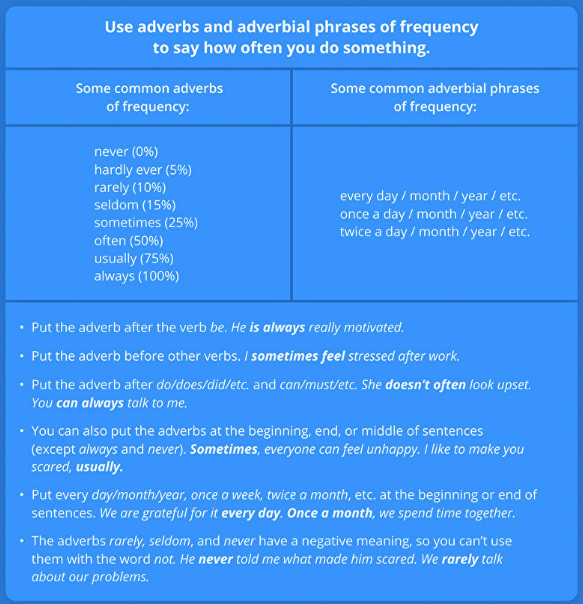
Choose the correct options
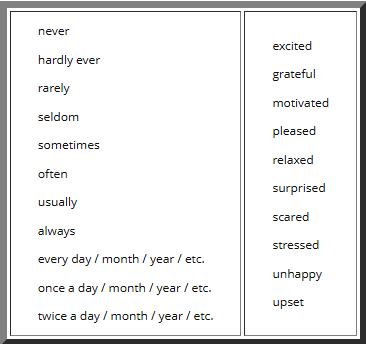
Make 8 sentences. Each sentence must have one word/phrase from the left and one word from the right column
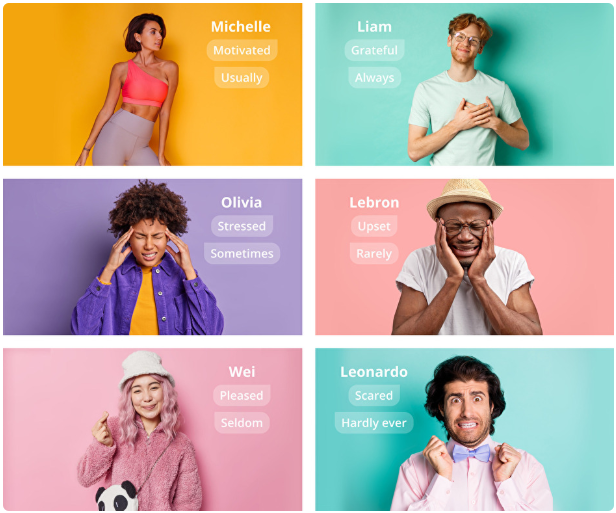
Look at the pictures and make sentences with the given words
Continue the phrases
- I love people who…
- I hate people who…
- People like me because…
- People dislike me because…
Listen to the audio and fill in the gaps
Choose the best alternative:
Match the opposites
Listen to the audio again and complete the sentences below with 1, 2 or 3
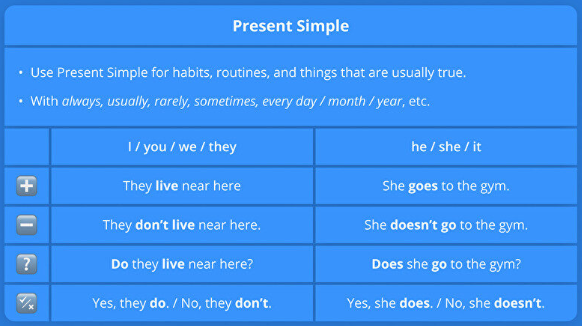
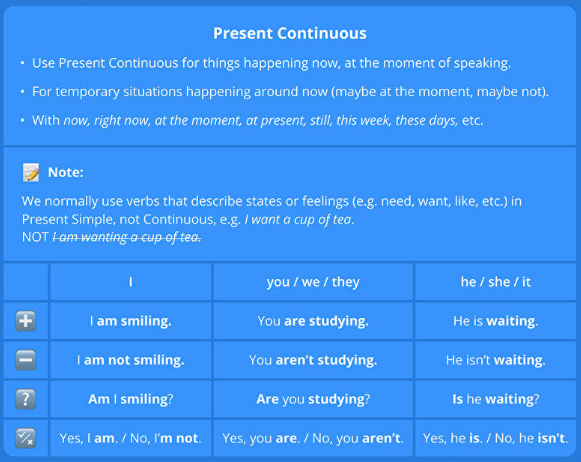
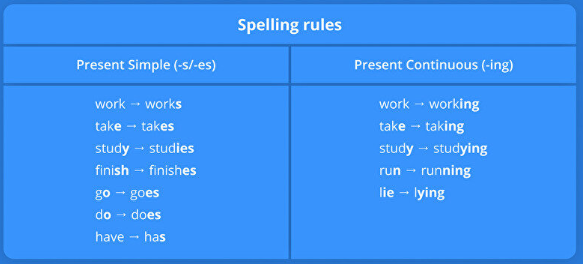
Present Simple OR Present Continuous?
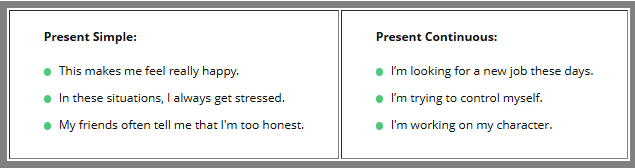
1. How do you make sentences in Present Simple?
2. How do you make sentences in Present Continuous?
3. Which tense do you use to describe actions happening now?
4. Which tense do you use to describe regular actions and routines?
5. Which time markers of Present Simple do you know?
6. Which time markers of Present Continuous do you know?