
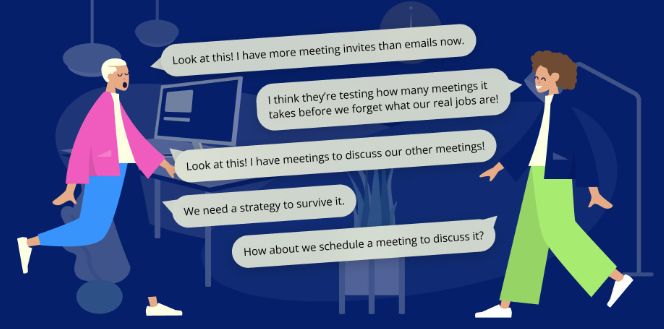
1. The problem they discuss is…
2. Daily / weekly, I have … meetings. (how many?)
3. These meetings are…
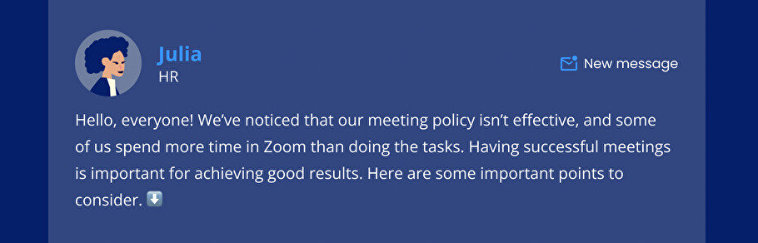
BE4.1_Read the text and answer the questions.
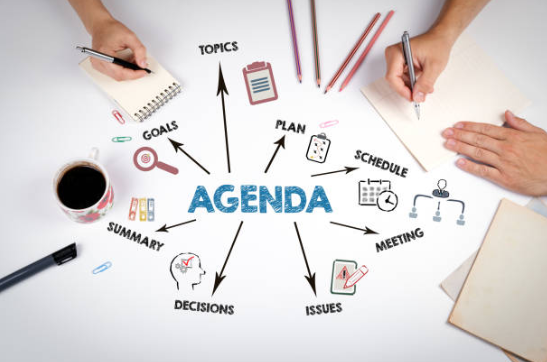
First, you need to set a clear agenda. This is a list of topics you will discuss during the meeting. It helps everyone know what to expect and keeps the meeting organized.
Second, describe the goals. These are the things you want to achieve by the end of the meeting. Goals help everyone stay focused and work towards the same result.
Third, invite the right people. Only the people who need to be there should attend this meeting. This helps to make sure that the meeting is productive and that everyone can share their ideas.
Fourth, make sure there are action items. These are tasks that need to be done after the meeting. Give these tasks to specific people so everyone knows what to do next.
Finally, have a follow-up plan. This includes checking the progress of the action items and discussing any problems or changes. Follow-up helps you make sure that you will achieve the meeting’s goals and that everyone will remember what they must do
1. What is the first thing you need to do before a meeting?
2. Why is it important to describe the goals for a meeting?
3. According to the text, who should come to a meeting?
4. What are action items, and why are they important?
5. What does a follow-up plan involve?
6. What other points can you add to the list?
BE4.2_Let’s practice some useful vocabulary. Complete the sentences with the correct options
BE4.3_Complete the sentences with the words from our new vocabulary
BE4.4_Complete the questions with the vocabulary from the list and then answer the questions
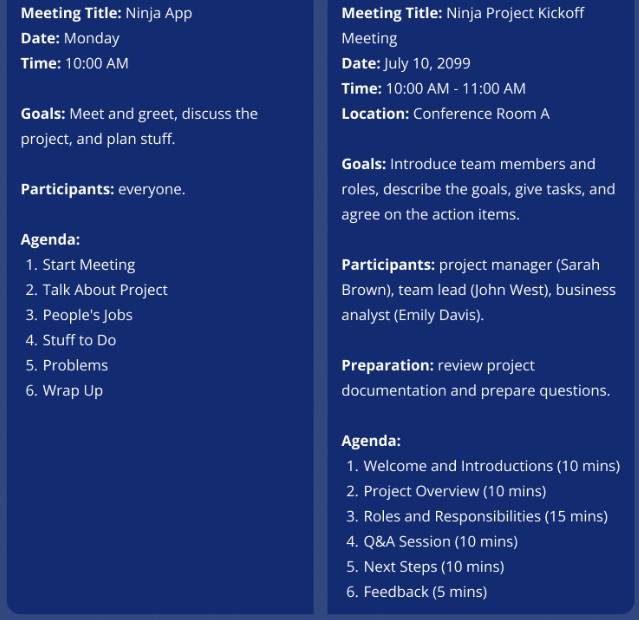
BE4.5_Have a look at TWO agendas below. One is OK, the other is wrong. Please compare them and say what is different about them.
BE4.6_Look at the list of other problems with meetings. Say why these are problems and how you can solve them.
Example:
#1 – No clear agenda
- Why it’s a problem: People don’t know what to talk about without an agenda. The meeting can become confusing and unorganized.
- How to solve: Make a list of topics to discuss before the meeting. Share the agenda with everyone before the meeting starts so everyone knows what to expect.
#2 – Meeting is too long
#3 – People talk too much
#4 – People are not prepared
#5 – No action items
#6 – No follow-up
#7 – People are not focused
#8 – Off-topic conversations
#9 – Language barriers
#10 – Too many meetings
BE4.7_Look at your calendar and say what your next meeting is. Prepare the agenda for this meeting.
BE4.8_Talk about your experiences with meetings. Share both positive and negative experiences. Think about what made the good meetings effective and why the bad meetings were not effective. Consider these questions:
- Did the meetings have clear agendas?
- Were there clear goals for the meetings?
- Were the right people invited to the meetings?
- Were there clear action items?
- Was there a follow-up plan after the meetings?
BE4.9_Look at your calendar and talk about the next event. Answer the questions about it.
1. Who will set the agenda for the next meeting?
2. Who will attend this meeting?
3. What steps will you take to achieve the goals in your next meeting?
4. What is the action item you need to discuss in the next meeting?
5. What will the follow-up plan have after your next meeting?
BE4.10_Read the dialogs in the picture and compare them.
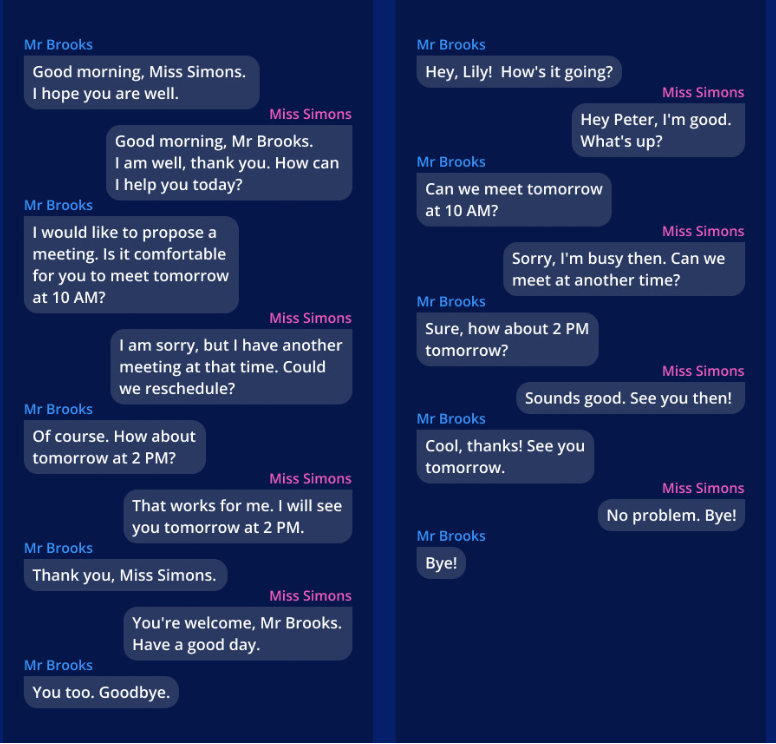
1. Which chat is formal and which is informal? Why?
2. Why is it better to use formal communication in business?
BE4.11_Read the text and drag its headings to the correct gaps. Then, answer the questions.
1. Do you often need to propose, confirm, refuse, or reschedule meetings? Why?
2. Why is it necessary to follow these tips when you work with business meetings?
BE4.12_Read the text again and choose if the statements are True or False.
Conditional !

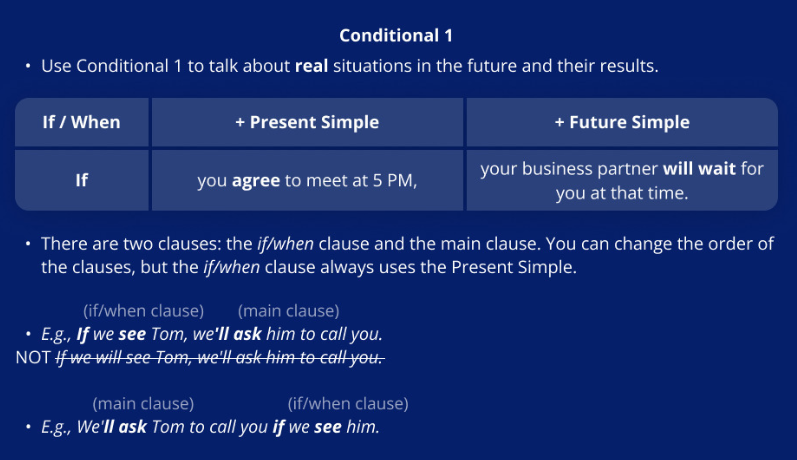
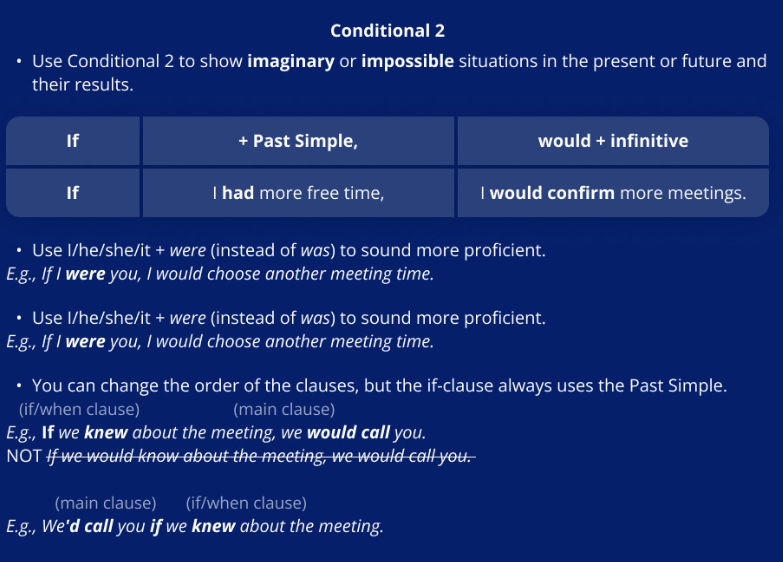
BE4.13_Look at the picture and complete the rules. Then, answer the questions.
1. Are these sentences about the present or the past?
2. Which Conditional describes a real situation with a real result?
3. Which Conditional describes an unreal situation with a hypothetical result?
4. Can you use WILL / WOULD after IF?
BE4.14_Read the sentences and answer the questions.
1. If we finish the project on time, the client will be happy.
- Do we need to finish the project on time to make the client happy?
- Will the client be happy if the project is late?
2. If I were the manager, I would give everyone a bonus.
- Am I the manager now?
- Will everyone get a bonus?
BE4.15_Complete the sentences using either Conditional 1 or Conditional 2

BE4.16_Complete the text using the correct forms of the verbs.
BE4.17_Complete the sentences with your own ideas.
1. If we finish the meeting early,…
2. If you arrive on time,…
3. When you bring your laptop,…
4. You must always answer when…
5. When you cancel the meeting, …
6. If we had more time,…
7. If I were the manager,…
8. I would write everything down if…
9. If we had better communication,…
10. He would tell about his ideas if…
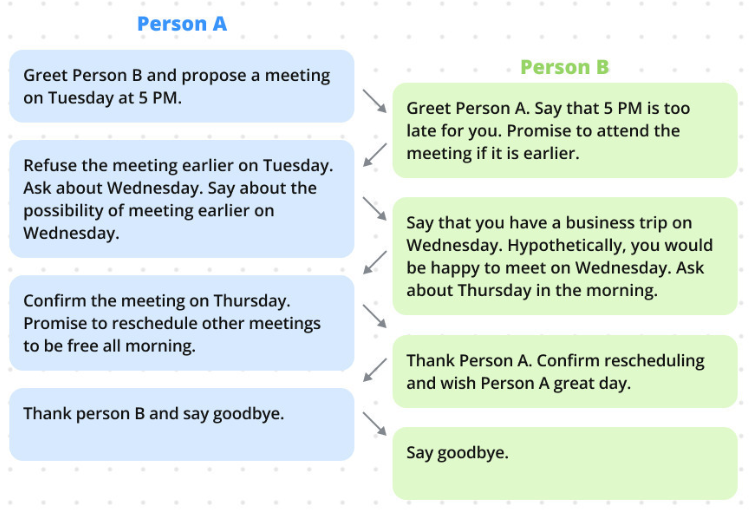
BE4.18_Look at your calendars and arrange a new product discussion meeting. You can propose, confirm, refuse, or reschedule it. Make sure you use Conditionals 1 and 2.
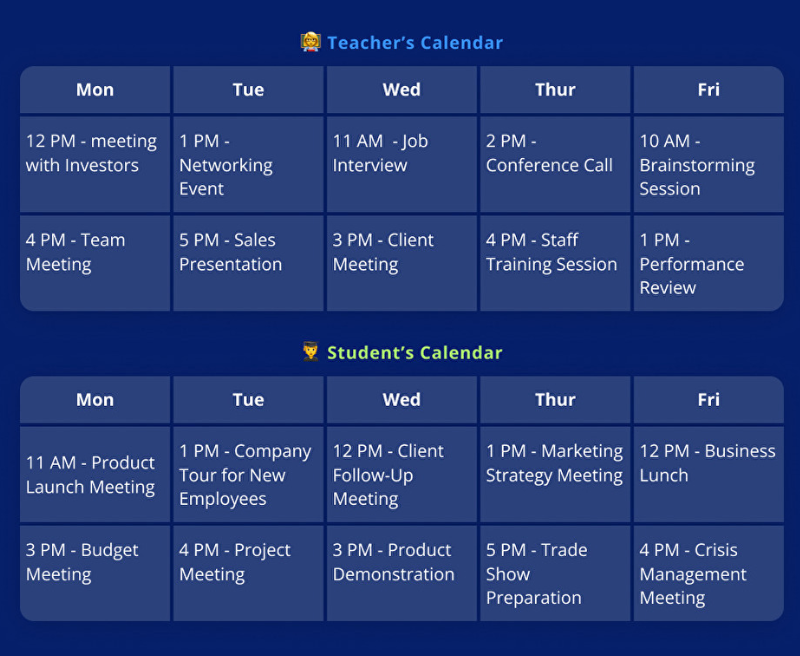
BE4.19_Complete the sentences using eother Conditional 1 or 2
BE4.20_Follow the plan in the picture and role-play the conversation with your teacher. Remember to use Conditionals 1 and 2.
BE4.21_Complete the sentences with the correct forms of the verbs below.


BE4.22_Read the comic strip and discuss the questions below.
1. How did the manager’s words make John feel in each situation?
2. Which feedback style do you like more? Why?
3. How can good feedback help the team?
4. What rules for giving feedback can you name?
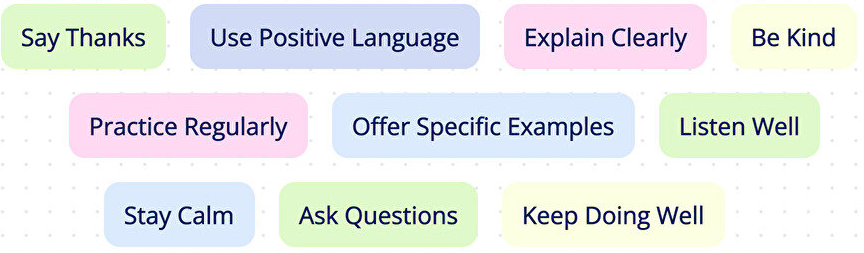
BE4.23_Read the article and choose the rules from the picture that were NOT mentioned.
The Art of Giving and Receiving Feedback
Feedback is very important in school, work, and everyday life. It helps us learn and grow, making us better at what we do. When we appreciate feedback, we show that we want to improve. Knowing how to give and receive feedback well helps us improve and feel good.
How to Give Feedback
➢ Be Fair: When you give feedback, be fair. Say good things and things that need improvement. For example, “I admire your hard work, but you can make your presentation clearer.”
➢ Appreciate Effort: Always appreciate the effort. If someone tries hard, tell them. For example, “I appreciate how much time you spent on this project.”
➢ Make Points Clear: Make sure your points are clear. Say what was good and what could be better. For example, “Your idea is great, but you can add more examples.”
➢ Pay Attention to Feelings: Pay attention to how the person feels. Be kind and helpful. For example, “You did a good job, and here are some tips to make it even better.”
How to Receive Feedback
➢ Listen Carefully: When you receive feedback, listen carefully. Pay attention to what the person says.
➢ Stay Calm: Stay calm and don’t get upset. Remember, feedback helps you improve.
➢ Ask Questions: If you don’t understand a point, ask questions. For example, “Can you explain what you mean by that?”
➢ Keep Up the Good Work: If someone admires your work, keep it up! If they suggest changes, try to improve.
Remember, giving and receiving feedback is an art. Be fair, appreciate people’s efforts, and keep up the good work!
BE4.24_Read the article again and choose True or False.
BE4.25_Practice new vocabulary by selecting sinonimes

BE4.26_Complete the comments with the words from the list. Then, discuss the questions below.
1. Have you ever had any similar experience? If yes, what happened?
2. What do you usually say when somebody gives positive and negative feedback about your work?
3. What is a sandwich method?
4. What other methods of giving feedback can you share?
BE4.27_Listen to the recording and put the topics of feedback in the order you hear them.
BE4.28_Listen to the recording again and complete the conversations with the missing words. Then, answer the questions below.
1. Which of the conversations includes a sandwich method?
2. Which phrases are used to give and receive feedback?
BE4.29_Match the sentences with the correct replies.
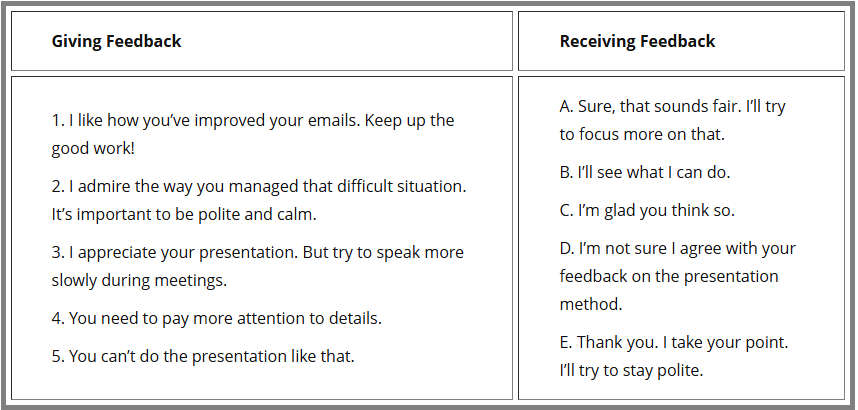
BE4.30_Choose the correct options to complete the article below.
BE4.31_Look at the chart. Take turns to role-play to give and receive feedback. Use the phrases below.
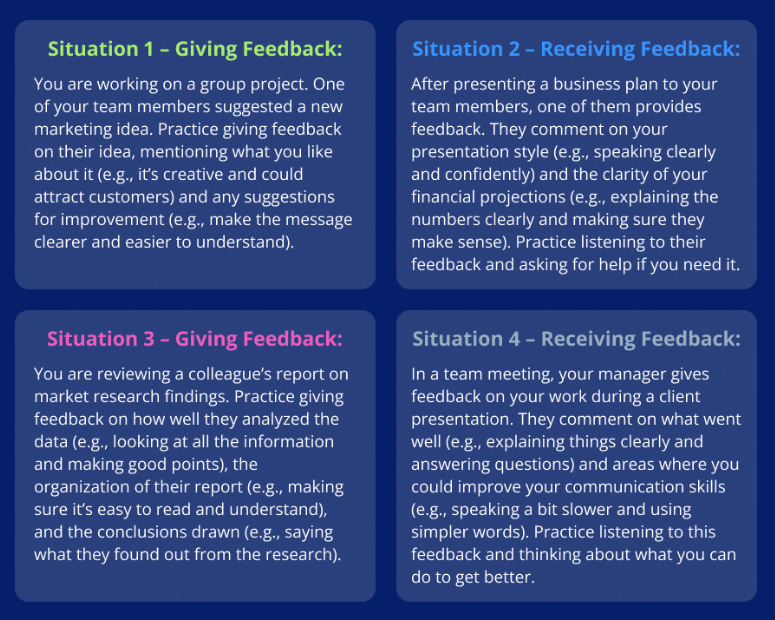
Useful phrases:
- I really like how you …
- I admire the way you …
- I appreciate …
- You’re improving …
- Keep up the good work!
- You need to pay more attention to …
- You can’t …
- It’s important to …
- Try to …
- I’m glad you think so.
- That sounds fair.
- I can look into that.
- I take your point.
- I’m not sure I agree.
BE4.32_Imagine you need to give a speech in front of your colleagues about the art of giving and receiving feedback at work. Practice your speech using the prompts below.
- Today, I want to talk about …
- Feedback helps us …
- It’s important for …
- When you give feedback, try …
- When you receive feedback, pay attention to …
- To sum up, …

BE4.33_Read the chat and answer the questions.
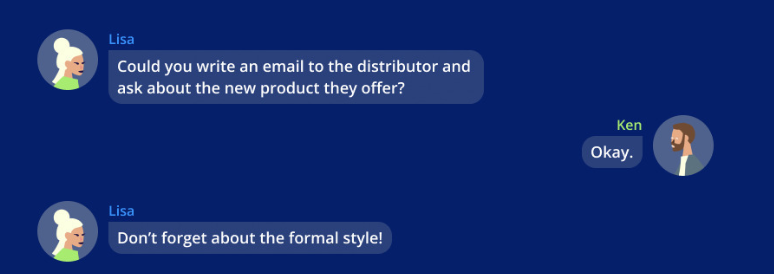
1. What does Lisa want?
2. What is the formal style?
3. Do you often write business emails?
4. What rules do you follow?
BE4.34_Watch the video and put the parts of the email in the correct order.
BE4.35_Watch the video again and complete its summary with the missing words.
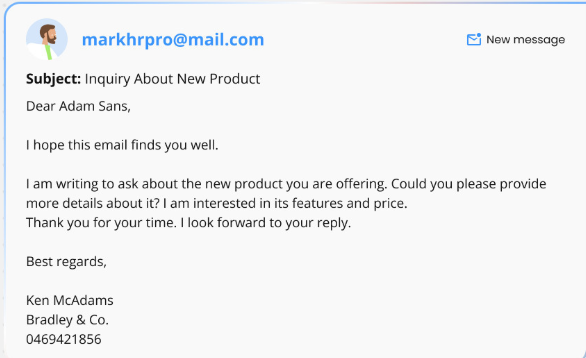
BE4.36_Read the email and answer the questions.
1. Where is the:
- subject line?
- greeting?
- body?
- call to action?
- name and contact information?
Requests and Responses in e-mail
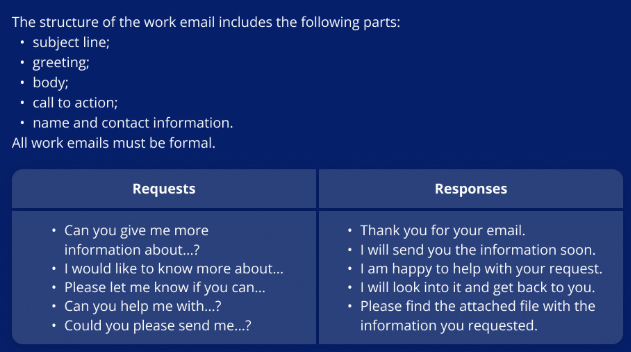
BE4.37_Read the response and answer the questions.
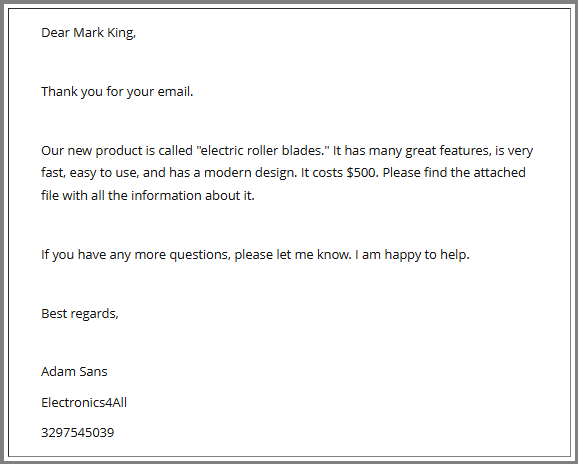
1. Is this letter a request or a response? Why?
2. What parts of the email can you name in it? Describe them.
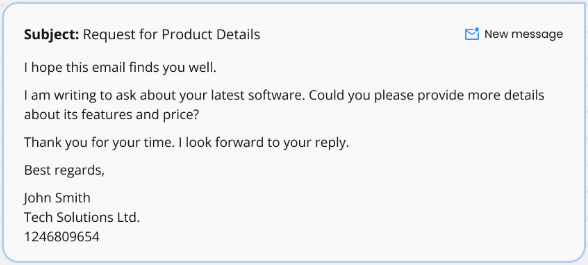
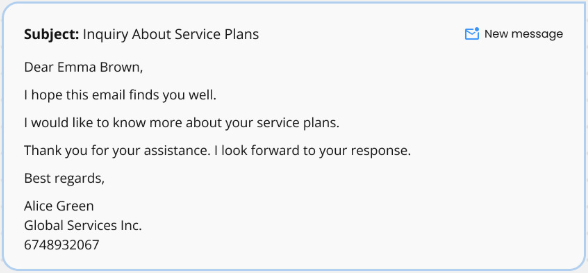
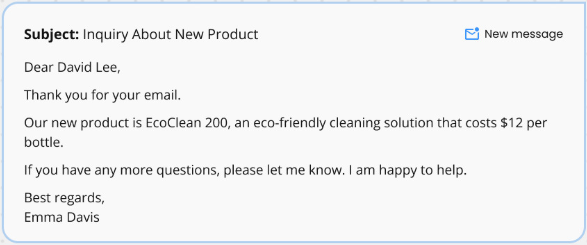
BE4.38_Read the emails and say:
- what parts (subject line / greeting / body / call to action / name and contact information) are missing;
- what type of email (request / response) it is.
BE4.39_ choose the correct alternatives
BE4.40_Look at the picture and create the script for your email requests about these things.

The structure:
- subject line
- greeting
- body
- call to action
- name and contact information
Useful phrases:
- Can you give me more information about…?
- I would like to know more about…
- Please let me know if you can…
- Can you help me with…?
- Could you please send me…?
BE4.41_Look at the picture and create the script for your email responses about these things.
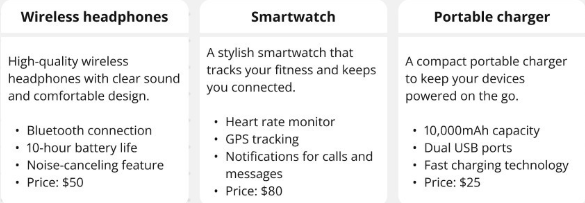
The structure:
- subject line
- greeting
- body
- call to action
- name and contact information
Useful phrases:
- Thank you for your email.
- I will send you the information soon.
- I am happy to help with your request.
- I will look into it and get back to you.
- Please find the attached file with the information you requested.
BE4.42_Formal or Informal? Read the sentences and write “Formal” next to the formal sentences and “Informal” next to the informal ones.
BE4.43_Answer the questions
1. What was the most recent business email you received?
2. What do you usually write in the subject line of your business emails?
3. Have you ever sent an email to arrange a meeting? What details did you include?
4. Have you ever used an email signature in your business emails? What information did you include?
5. What is the longest business email you have written? What was it about?
6. Have you ever received a business email that was difficult to understand? Why was it difficult?
7. What do you usually do before sending a business email?
BE4.44_Complete the sentences with the missing words.
Now use sentences A – D to reply to the requests. You need to use some replies twice.
Replies:
A. Thank you for your email. I will send you the information soon.
B. Thank you for your email. I am happy to help you with your request.
C. Thank you for your email. I will look into it and get back to you.
D. Thank you for your email. Please find the attached file with the information you requested.
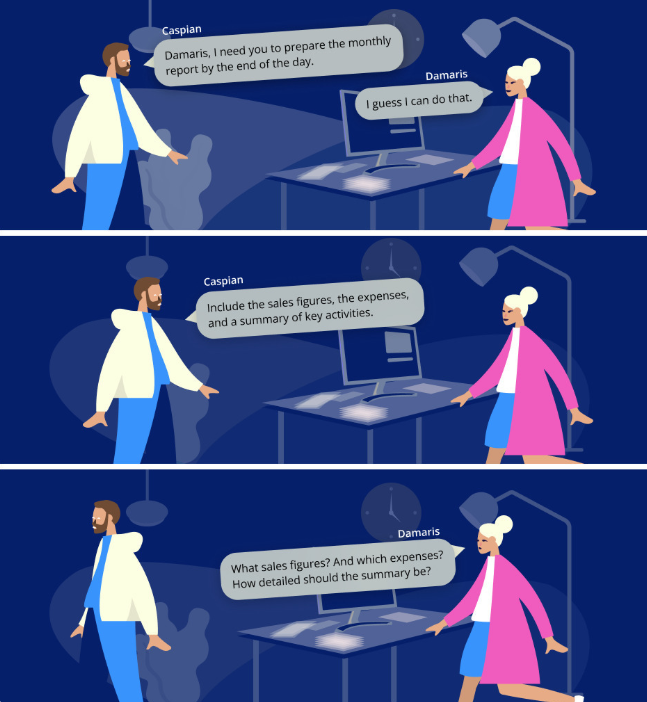
BE4.45_Read the comic strip and complete the sentences below.
1. A work instruction is …
2. It is important to understand it because …
3. Some possible challenges in understanding work instructions are …
BE4.46_Complete the article with the words from the list. Which types of work instructions do you mostly use at work?
BE4.47_Read the article again and answer the questions
BE4.47_Complete the sentences using either Conditional 1 or 2
BE4.47_Read Caspian’s task again and choose the requests you would use to check its understanding. What else is necessary to ask?
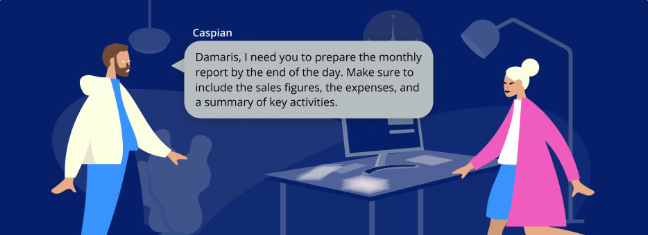
1. I’d like to know more about what specific details you need to include in the sales figures sections.
2. Where can I find the sales data?
3. Can you give me more information about the key activities you want in the report?
4. Could you please send me the template you prefer for this report?
5. Can you give me more information about the specific steps I need to follow in the work instructions you provided?
BE4.48_Listen to the conversation and put the replies in the correct order.
BE4.49_Read Caspian’s instructions and answer the questions below. Then, role-play a conversation where you will clarify the tasks on the list with your teacher.
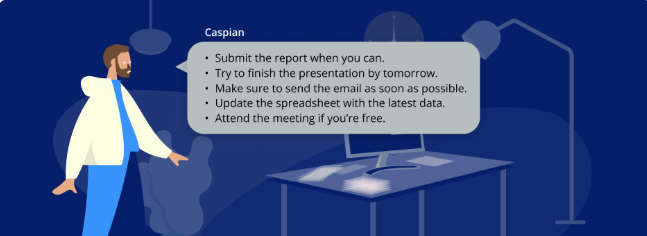
1. What feedback would you give Caspian about his instructions if you were his manager?
2. What would you ask to clarify his instructions?
BE4.50_Imagine you need to give a speech on the topic of Understanding Work Instructions. Use the plan below.
1. Explain why it’s important to follow instructions at work.
2. Describe a time when clear instructions helped you complete a task.
3. Discuss which problems can happen when instructions are not clear.
4. Share tips on what to do if if you don’t understand instructions.