
Do you remember your first day at work?
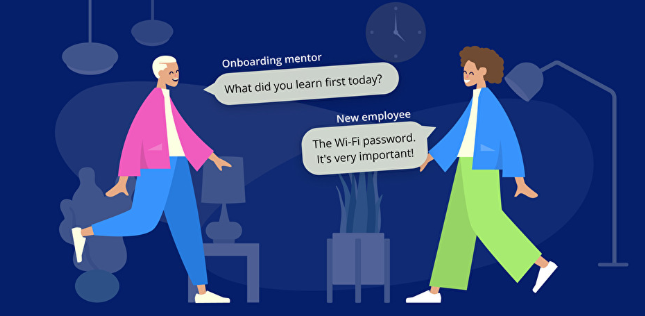
1. What is funny about this comic strip?
2. Do you remember your first day at work?
3. What did you do on your first day at work?
4. How did you feel on your first day at work? Why?
BE3.1_Read the text. Then, answer the questions.
Employee Onboarding Programs
Employee onboarding is very important for new workers and the company. A good onboarding process helps new workers start their jobs quickly and feel part of the team. Here are some companies with great onboarding programs.
Google has a special way of welcoming new workers. They use both online and offline meetings. New workers learn about the company and meet important people. Each new worker gets a colleague to help them in their first weeks.
Facebook also spends a lot on onboarding. From the first day, new workers join their new team and attend different social events. They get training to learn the skills they need for their role.
Microsoft
Microsoft gives new workers a personalized welcome. New workers have mentors and receive regular feedback from their managers to help them grow.
Amazon
Amazon’s onboarding is quick and detailed. They make everything so easy that new workers can focus on their jobs. Amazon has a lot of training to help workers. They also train in their departments.
Apple
Apple’s onboarding is detailed and focuses on the company itself. New workers join interactive sessions to learn about Apple’s history, culture, and mission. They can also take a break to relax and meet their colleagues.
Netflix
Netflix has a different way of onboarding. It gives workers freedom. New workers learn about the company’s culture, so they know what is necessary and can do their best work. They have a flexible schedule to manage their time and tasks.
1. Who uses both online and offline meetings?
2. Where do new workers train in their departments?
3. Where do new workers have mentors?
4. Who gives workers freedom?
5. In which company does onboarding focus on the company itself?
6. Who spends a lot on onboarding?
7. Which of these companies would you like to work at? Why?
8. Which practices of the onboarding process do you find useful? Why?
BE3.2_Do the exercise by selecting the correct definition for the word in CAPITALS
BE3.3_Complete the sentences with the correct words below. Then, answer the questions.
DOs and DON’Ts of the onboarding process:
1. Do you find these DOs and DON’Ts useful? Why?
2. Which advice do you find the most important? Why?
3. Does your company follow the same rules during the onboarding process?
4. What else would you add to these tips? Why?
BE3.4_Complete the text with the correct options. Is it an example of a good or bad onboarding process? Why?

BE3.5_Listen to a voice message and complete the list below. Then, answer the questions.
1. Was Raj’s onboarding good or bad? Why?
2. What would you recommend to change in this onboarding process? Why?
BE3.5_Complete the sentences with the correct alternative
BE3.6_Plan a perfect onboarding activity for a new worker. Think about:
- how it will help the new employee;
- how it will connect the team and the new employee;
- what training the new employee will get;
- what support the employee will get;
- how it will help the new employee feel ready to start their job.
Example: I would organize an excursion for a new employee. It would be helpful because the new employee would better understand the work processes…

BE3.7_Think about your best and worst onboarding processes. Talk about them describing the following things:
1. the first day
2. welcoming activities
3. schedule
4. manager and team support
5. breaks
Wordlist:
- training
- onboarding
- a colleague
- a team
- a manager
- a department
- a schedule
- a meeting
- a role
- a break
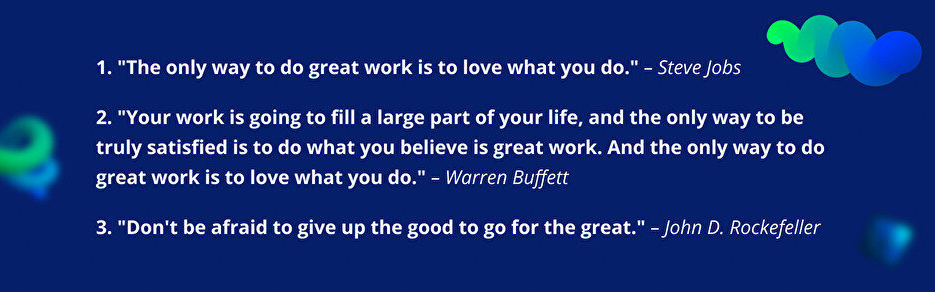
BE3.8_Read the quotes, and choose the one you like best. Explain why you chose exactly this one.
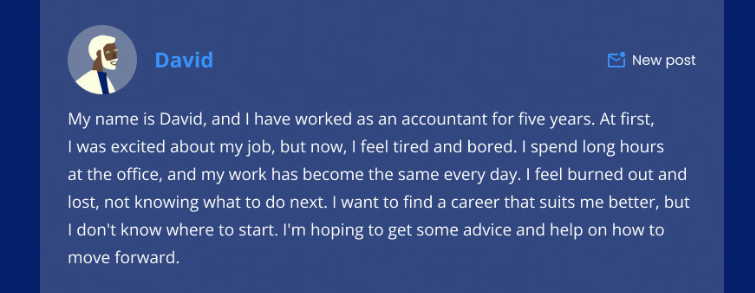
BE3.9_Read the post and answer the questions.
1. How does David feel?
2. What does “to burn out” mean?
3. Why does David feel burned out?
4. Have you ever felt that your job is not good for you? What did you do about it?
5. What advice would you give someone who is in the same situation?
BE3.10_Listen to the dialog. Complete the summary with the correct words or phrases.
BE3.11_Read the dialogue script again. Find the sentences in which David asks for advice, and Marcus gives advice.
Marcus: Hi David, I understand you’re feeling burned out with your job. Can you tell me more about what’s going on?
David: Hi, Marcus. Yeah, I’ve been an accountant for five years, and it’s just not exciting anymore. I don’t like going to work every day. What should I do?
Marcus: It sounds tough. Have you thought about what else you might want to do?
David: I have a few options, but I’m not sure which direction to take. Can you give me some advice?
Marcus: Of course. You should start by identifying your strengths and interests. Why don’t you make a list of things you enjoy doing, both in and out of work?
David: That’s a good idea. I like working with people and solving problems. What else should I do?
Marcus: You could also talk to people who work in fields that interest you. They might give you insights into different careers. Have you tried networking with any professionals in those areas?
David: Not really. I guess I should start doing that. But what if I’m not good at it?
Marcus: Don’t worry, it’s a skill you can develop. You should try attending industry events or joining online communities.
David: That makes sense. Is there anything else you recommend?
Marcus: Yes, you should update your resume and start applying for jobs that match your new interests. Change your resume to show the skills needed for those jobs. And don’t forget to take care of yourself during this process. Burnout can make everything seem worse.
David: Thanks, Marcus. I feel more confident about my next steps now. It’s good to have a plan.
Marcus: You’re welcome, David. Remember, career changes can be challenging, but with the right approach, you can find a plan that suits you better. Keep me updated on your progress!
Asking for Advice:
1. ___________________________________
2. ___________________________________
3. ___________________________________
Giving Advice:
1. ___________________________________
2. ___________________________________
3. ___________________________________
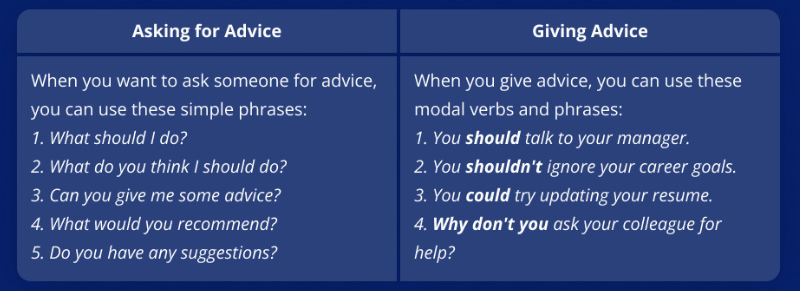
Answer the questions.
- When you say, “What should I do?” are you asking for someone’s opinion or giving your own?
- If you ask, “What do you think I should do?” are you more interested in someone’s knowledge or opinion?
- Does “Can you give me some advice?” sound like a request for general information or specific help?
- If you say, “Do you have any suggestions?” are you open to hearing one idea or many?
- If someone tells you, “You should talk to your manager,” are they giving you strong advice or suggestions?
- If someone says, “You could try updating your resume,” are they telling you what to do or giving you an
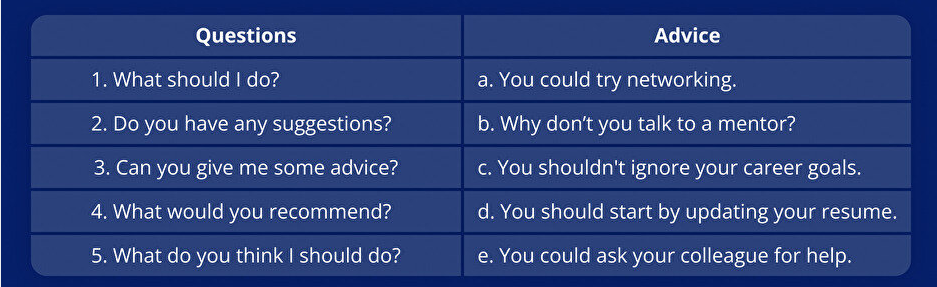
BE3.12_Match the questions on the left with the advice on the right. More than one correct answer is possible.
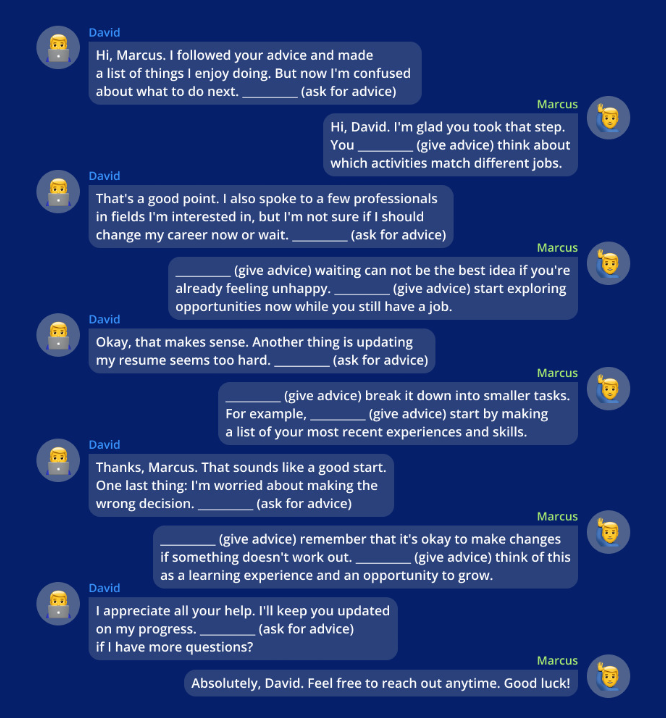
BE3.13_David followed Marcus’s advice but now has some problems and is not sure what to do. He asks for more help from Marcus. Complete the dialog orally to fit the context.
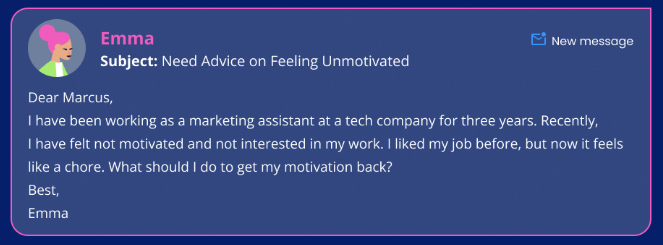
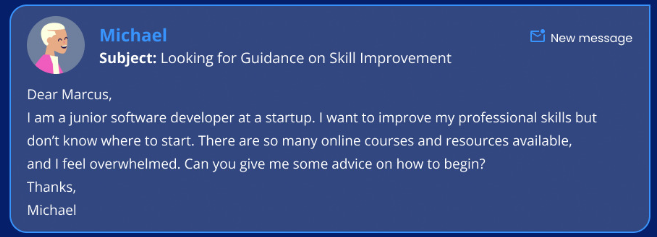
BE3.14_Read the emails. Role-play a coaching session as in the dialog in our lesson.
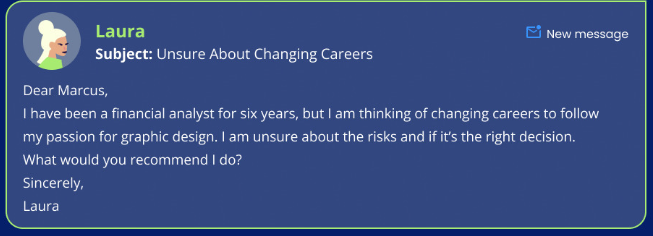
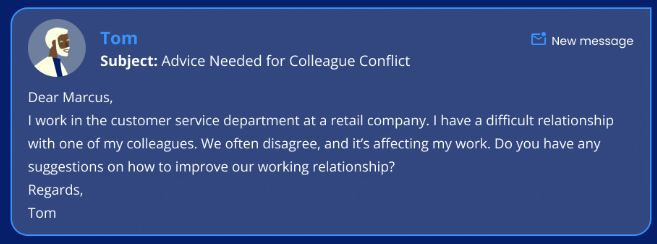
BE3.15_Take part in a debate about the following topics.
- Choose a side: Do you agree or disagree with the topic?
- Share your opinion: Say why you agree or disagree.
- Ask for advice: Ask your partner for his/her opinion or advice.
- Explain your ideas: Be ready to explain your opinion.
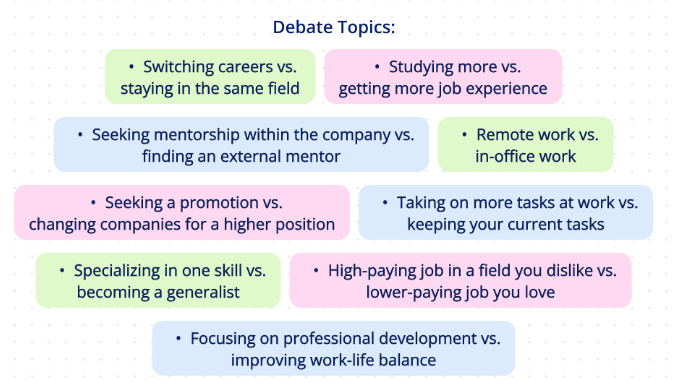
BE3.16_Read the instructions and complete the exercise.
Instructions:
- Start with a simple situation and ask for help or advice.
- Your partner answers the question with simple advice.
- Create a new situation based on that advice.
- Repeat steps 2 and 3 until you solve the problem.
Example:
A: I’m unhappy in my job. What should I do?
B: You should talk to your boss about how you feel.
A: I talked to my boss, but nothing changed. What should I do now?
B: I think you…
Idea Bank:
1. You feel tired from work and stressed.
2. You often disagree with your boss.
3. You think there are no chances to grow in your job.
4. You want more responsibilities, but don’t know how to ask.
5. You need help to work well with your team.
6. You got a job offer from another company, but don’t know if you should take it.
BE3.17_Share your personal experience with career counseling, changing jobs, or feeling unmotivated at work. If you don’t have a personal story, share one about a friend or relative.
- Explain the situation.
- Say what advice you received.
- Describe how it helped you.

BE3.18_Look at the picture and answer the questions below.
1. How does the man feel in each picture? Why?
2. What did he do to feel better?
3. Why do people change their careers?
BE3.19_Listen to the interview and choose if the sentences are True or False.
BE3.20_Listen to the interview again and complete it with the missing words below. Then, answer the questions.
1. Do you know any of the phrases you completed?
2. What do you think they mean?
BE3.21_Write the correct words next to their definitions.
BE3.22_Complete the sentences with the correct options

B3.23_Complete the text with the correct phrases.
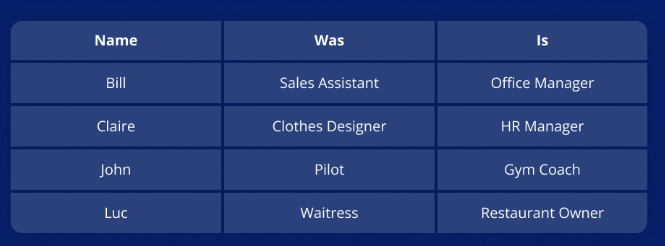
BE3.24_Look at the table and create a story for each person.
Example: Hi, I’m Bill. I worked as a sales assistant, but I didn’t like this job very much. So, one day, I decided to make a career move…
Wordlist:
- career move
- career break
- career plan
- career opportunities
- career path
- career ladder
BE3.25_Complete the sentences with the correct words
BE3.26_Read the options and choose which one you would prefer. Explain your choice.
- to work at one company all your life VS. to change jobs every year
- to start your own business VS. to work for someone else
- to work from home VS. to work in an office
- to work part-time VS. to work full-time
- to take a job with a high salary but not to like it VS. to take a job with a lower salary but to like it
BE3.27_Choose one of the following options and talk about yourself.
Option 1:
Talk about your career. What career plan did you have? Did you take a career break? What about career moves? What was your career path from the past to the present?
Option 2:
Talk about your ideal career plan. What career ladder do you want to climb? Do you plan to take career breaks? What does your perfect career look like?
Wordlist:
- career move
- career break
- career plan
- career opportunities
- career path
- career ladder
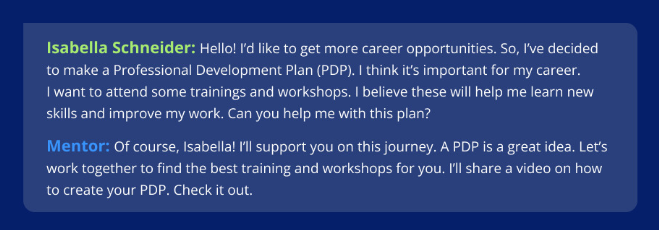
BE3.28_Read the chat and answer the questions below.
1. What is a PDP?
2. What do you think it includes?
3. Who needs it?
4. Have you ever had a PDP? If yes, what steps did it include?
5. What do you usually do for your professional development?

BE3.29_Listen to the audio and choose the things you need to include in a PDP.
- Short-term goals
- Long-term goals
- List of people who support you
- Steps you need to take
- Skills you need to practice
- Salary and bonus goals
- Ways to track your progress

BE3.30_Complete Isabella’s message with the missing titles.
BE3.31_Read Isabella’s message again and discuss the questions below.
1. What are Isabella’s short-term and long-term goals?
2. What skills would she like to improve?
3. What does Isabella want to do to reach her goals?
4. What skills do you need for your professional development?
5. What steps can you take to improve your skills?
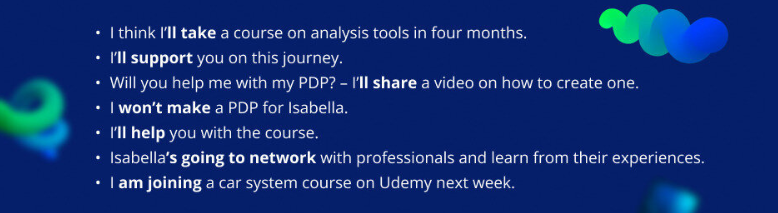
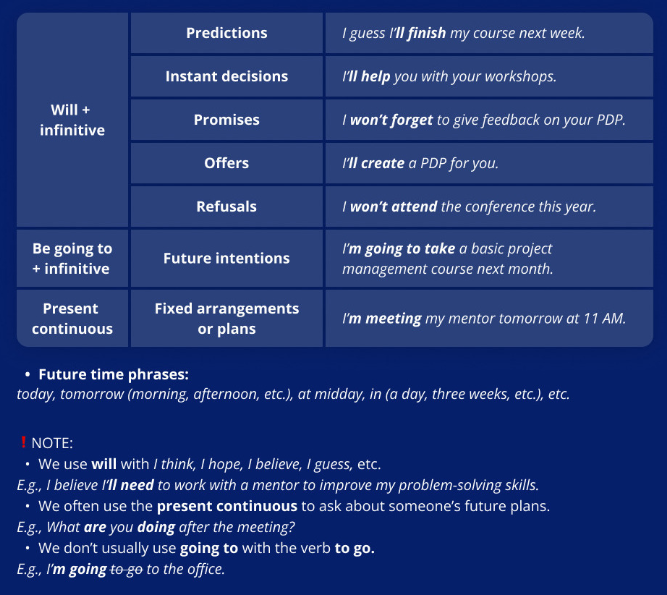
BE3.32_Read the sentences and complete the rules with the words from the list.
Future forms
BE3.33_Read the sentences and answer the questions below.
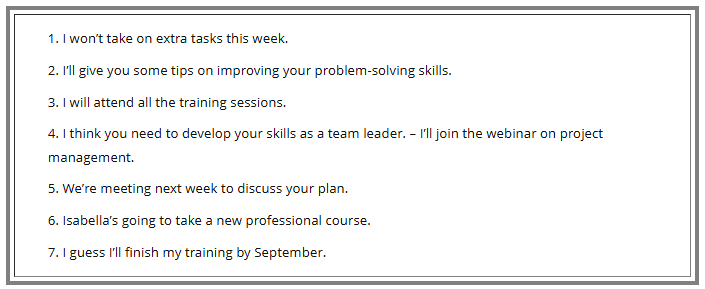
- Which of the sentences expresses:
- a future prediction?
- an instant decision?
- a promise?
- an offer?
- a refusal?
- a future intention?
- a fixed arrangement or plan?
BE3.34_Choose the correct alternative
BE3.35_Complete the sentences with the correct forms of the verbs from the list.
BE3.36_Complete the conversation with the correct forms of the verbs.
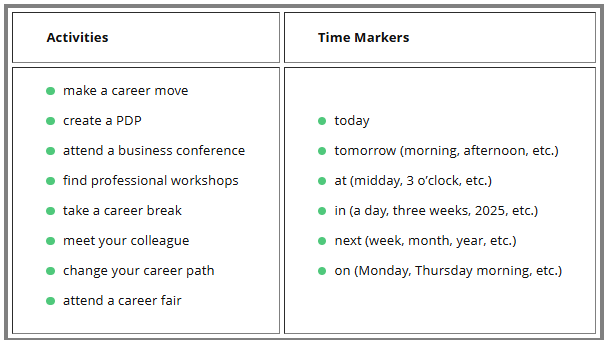
BE3.37_Look at the list of things and make sentences about yourself using will, be going to, and present continuous.
BE3.38_Make a speech about your PDP. Follow the prompts above.
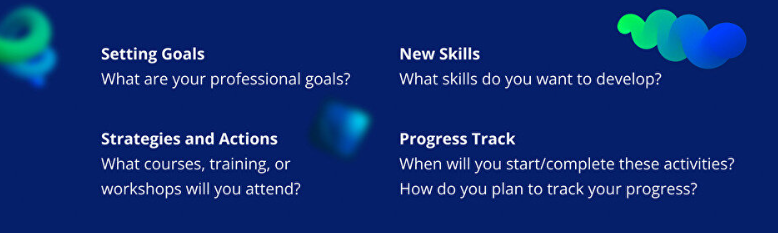
BE3.39_Think about your 5 professional goals and share them with your teacher using the prompts. Then, answer the questions below.
- I hope I …
- In two months, I…
- I believe I…
- Tomorrow I…
- In the near future, I…
1. Why are these goals important to you?
2. What steps will you take to achieve these goals?
3. How will these plans help you in your career?

BE3.40_Read the message and answer the questions.
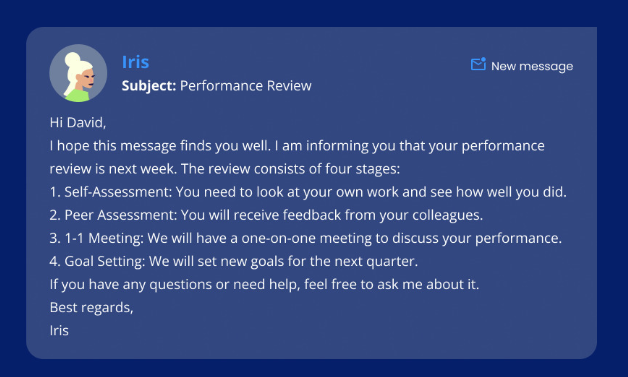
1. What stages of the performance review are in the message?
2. Who will give feedback during the peer assessment?
3. Have you ever had a performance review? If yes, how was your experience?
4. Do you think performance reviews help you understand how well you work? Why or why not?
BE3.41_Read David’s self-assessment form and complete it with the correct words. Then, answer the questions
1. Is it easy or hard to make a self-assessment of your work? Explain your choice.
2. What things do you think are most important when you look at your own achievements?
BE3.42_Complete David’s peer evaluation using the correct phrases from the list
BE3.43_Complete the gaps and read the dialogue below.
BE3.44_Read David’s blog post and complete the gaps using the correct future forms (will, be going to, or present continuous).
BE3.45_Read David’s colleague’s blog post after the performance review. Choose the correct options to complete the sentences.
BE3.45_Prepare a short presentation about your work performance over the past year.
- Say what projects or tasks you finished well.
- Talk about the skills or areas where you can improve.
- Did you go to any training sessions or ask for feedback?
- Talk about your future goals and plans.
- Find any of your “weak” points that should be improved.
BE3.46_Role-play a performance review meeting with your teacher. The teacher will be your supervisor. You will discuss your self-assessment.
- Talk about your achievements and areas for improvement.
- Listen and respond to the supervisor’s advice.
- Set your future goals.